Conversational AI: Technology with Personality that is supporting businesses large and small with improved custpomer service and efficiency
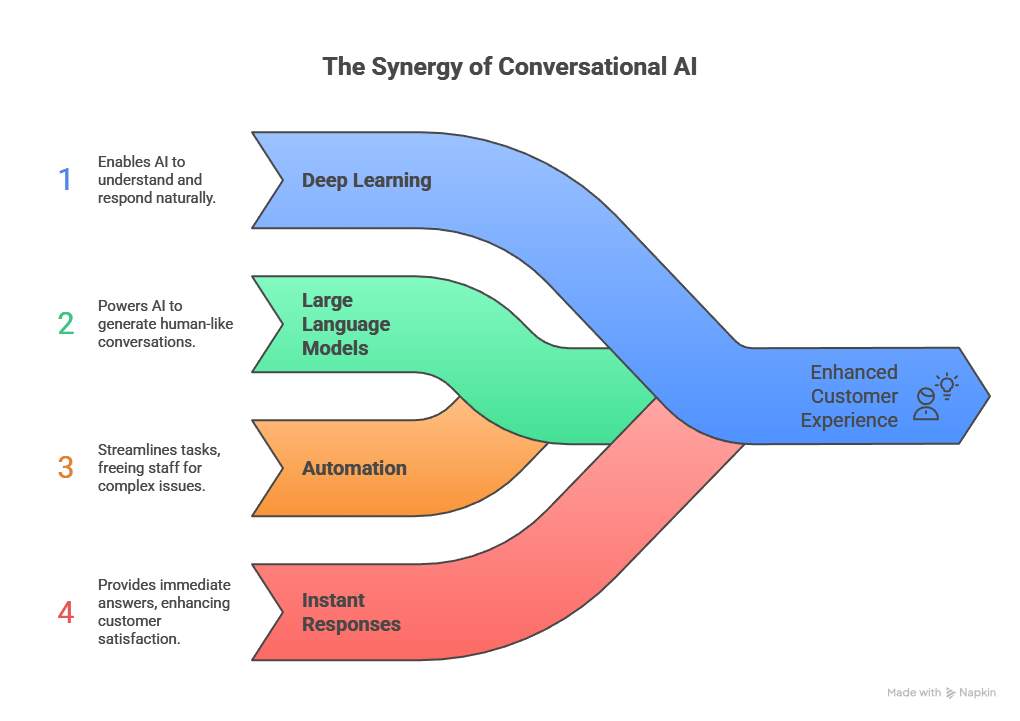
Conversational AI represents a paradigm shift in how humans interact with machines. It’s not merely about automating tasks; it’s about creating engaging, insightful, and empathetic experiences. Powered by advancements in deep learning and large language models, Conversational AI agents are designed to hold natural, flowing conversations, offer valuable insights and guidance, and continuously learn and improve with each interaction. This technology addresses critical business challenges, such as freeing up staff time from routine calls, capturing missed opportunities during peak hours and after-hours, and meeting the evolving customer expectations for instant responses and human-like empathy.
The Essence of Conversational AI
At its core, Conversational AI aims to replicate human conversation. This involves understanding the nuances of language, including intent, context, and sentiment, and responding in a way that is both informative and engaging. Unlike traditional chatbots that rely on pre-programmed scripts and keyword recognition, Conversational AI leverages sophisticated algorithms to process and generate language, enabling it to handle a wide range of queries and scenarios.
Key Components
- Natural Language Processing (NLP): NLP is the foundation of Conversational AI, enabling machines to understand, interpret, and generate human language. It involves techniques such as:
- Natural Language Understanding (NLU): NLU focuses on understanding the meaning and intent behind user input. It involves tasks such as:
- Intent Recognition: Identifying the user’s goal or purpose.
- Entity Extraction: Identifying key pieces of information within the user’s input.
- Sentiment Analysis: Determining the emotional tone of the user’s message.
- Natural Language Generation (NLG): NLG focuses on generating human-like responses that are coherent, relevant, and engaging.
- Natural Language Understanding (NLU): NLU focuses on understanding the meaning and intent behind user input. It involves tasks such as:
- Deep Learning: Deep learning models, particularly recurrent neural networks (RNNs) and transformers, have revolutionized Conversational AI. These models can learn complex patterns in language data, enabling them to generate more natural and contextually appropriate responses.
- Large Language Models (LLMs): LLMs, such as GPT-3 and BERT, are pre-trained on massive datasets of text and code. They possess a remarkable ability to generate human-quality text, translate languages, and answer questions in an informative way. These models serve as the backbone of many modern Conversational AI systems.
- Dialogue Management: Dialogue management is the process of controlling the flow of a conversation. It involves tracking the conversation history, managing user context, and determining the appropriate response at each turn.
Benefits of Conversational AI
Conversational AI offers a wide range of benefits for businesses and customers alike.
For Businesses
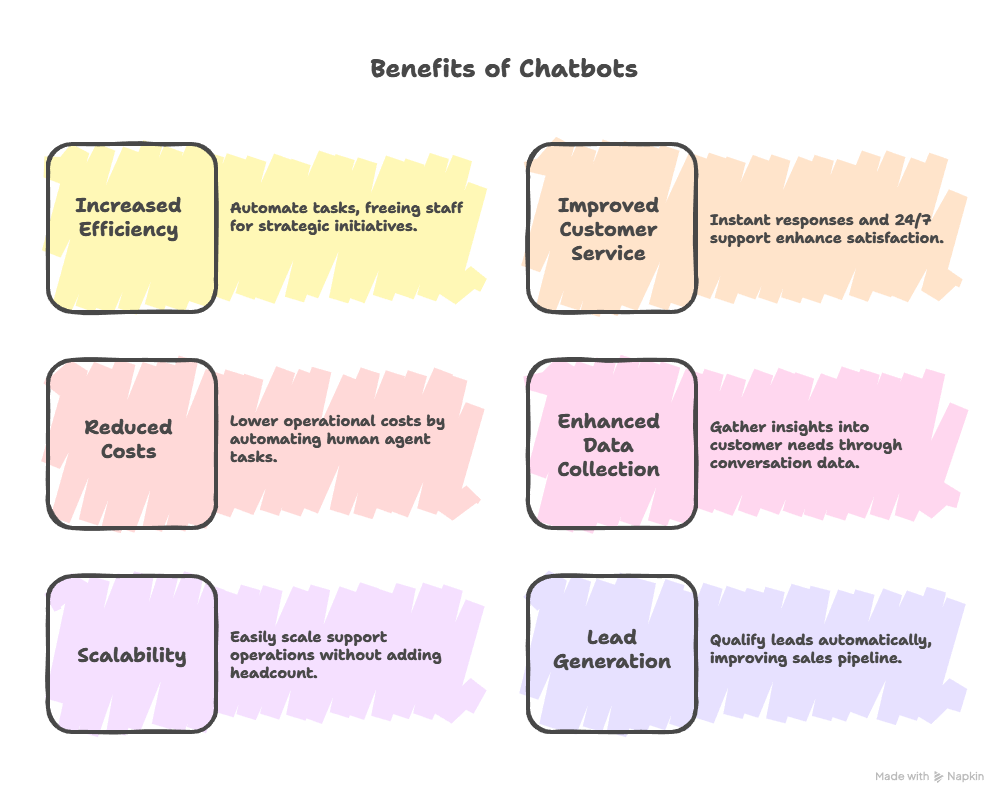
- Increased Efficiency: Automate routine tasks and free up staff time to focus on more complex and strategic initiatives.
- Improved Customer Service: Provide instant responses and 24/7 support, enhancing customer satisfaction and loyalty.
- Reduced Costs: Lower operational costs by automating tasks that would otherwise require human agents.
- Enhanced Data Collection: Gather valuable insights into customer needs and preferences through conversation data.
- Scalability: Easily scale support operations to meet fluctuating demand without adding headcount.
- Lead Generation: Qualify leads and guide potential customers through the sales funnel.
For Customers
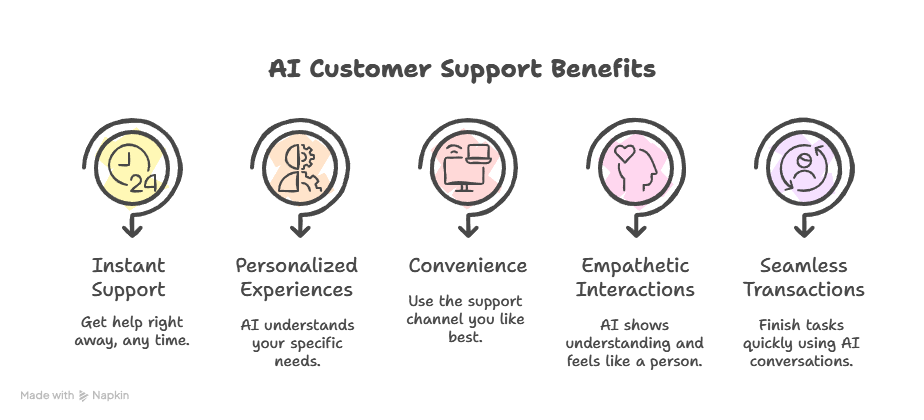
- Instant Support: Receive immediate assistance and answers to their questions, regardless of the time of day.
- Personalized Experiences: Interact with AI agents that understand their needs and preferences.
- Convenience: Access support and information through their preferred channels, such as voice, text, or chat.
- Empathetic Interactions: Experience human-like empathy and understanding from AI agents.
- Seamless Transactions: Complete tasks and transactions quickly and easily through conversational interfaces.
Addressing Business Challenges
Conversational AI directly addresses several key business challenges:
Routine Calls and Staff Time
Routine calls, such as bookings, FAQs, directions, and administrative tasks, consume a significant amount of staff time. Conversational AI can automate these tasks, freeing up employees to focus on more complex and value-added activities.
Peaks and After-Hours
Peaks in demand and after-hours create missed opportunities, even with live answering services in place. Conversational AI can provide 24/7 support, ensuring that no customer inquiry goes unanswered.
Customer Expectations
Customers expect both instant responses and human empathy when it matters. Conversational AI can deliver both, providing immediate assistance and personalized interactions that build trust and loyalty.
Applications of Conversational AI
Conversational AI is being used in a wide range of industries and applications, including:
- Customer Service: Providing support, answering questions, and resolving issues.
- Sales: Qualifying leads, guiding customers through the sales funnel, and closing deals.
- Marketing: Engaging customers, promoting products and services, and gathering feedback.
- Healthcare: Scheduling appointments, providing medical information, and monitoring patient health.
- Finance: Providing financial advice, processing transactions, and detecting fraud.
- Education: Providing personalized learning experiences, answering student questions, and grading assignments.
- Human Resources: Answering employee questions, onboarding new hires, and managing benefits.
The Future of Conversational AI
The future of Conversational AI is bright. As technology continues to evolve, we can expect to see even more sophisticated and human-like AI agents that can handle a wider range of tasks and scenarios. Some key trends to watch include:
- Improved Natural Language Understanding: AI agents will become even better at understanding the nuances of human language, including intent, context, and sentiment.
- Enhanced Personalization: AI agents will be able to personalize interactions based on individual customer preferences and needs.
- Multimodal Interactions: AI agents will be able to interact with users through multiple modalities, such as voice, text, and video.
- Proactive Assistance: AI agents will be able to proactively offer assistance and guidance based on user behavior and context.
- Integration with Other Technologies: Conversational AI will be integrated with other technologies, such as IoT devices and augmented reality, to create even more immersive and engaging experiences.
In conclusion, Conversational AI is more than just technology; it’s a powerful tool that can transform the way businesses interact with their customers. By automating routine tasks, providing instant support, and delivering personalized experiences, Conversational AI can help businesses improve efficiency, enhance customer satisfaction, and drive growth. As technology continues to evolve, Conversational AI will play an increasingly important role in shaping the future of customer engagement.
Blog by Peter HanleySelect-AI
More reading, How to prepare your business for a custom AI employee