The chatbot is dead. Discover why 2026 is the year small businesses switch to AI agents to automate tasks, boost ROI, and reclaim 20 hours a week. Learn how!
Post by Peter Hanley coachhanley.com
The “I’m sorry, I didn’t quite catch that” loop is officially dead—and if your business is still using it, so is your customer retention. In 2026, the era of the reactive chatbot has ended, replaced by autonomous AI agents that don’t just talk; they act. While traditional bots wait for a user to type the perfect prompt, modern AI agents are already identifying leads, resolving billing disputes, and updating CRMs independently. For the average small business, this isn’t just a software upgrade; it’s the equivalent of hiring a 24/7 department for the price of a coffee subscription.
Chatbots vs. AI Agents: The 2026 Paradigm Shift
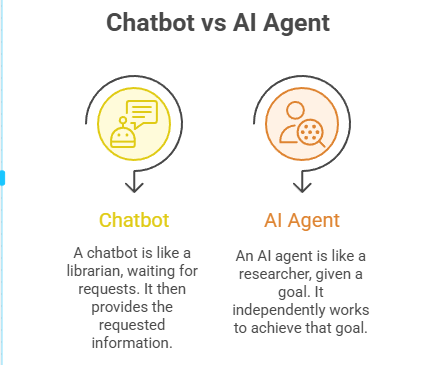
The fundamental difference comes down to Agency. A chatbot is a librarian; it waits for you to ask for a book and then hands it to you. An AI agent is a researcher; you give it a goal (“Find me 10 new leads and book them for a call”), and it goes out and does the work.
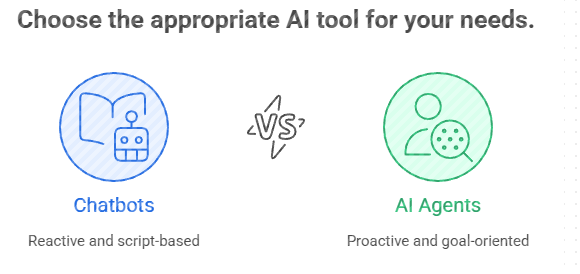
- Chatbots: Reactive, script-based, and easily “broken” by unexpected questions.
- AI Agents: Proactive, goal-oriented, and capable of multi-step reasoning across different software tools (APIs).
Why SMEs are “Firing” Their Old Bots (The ROI Stats)
Recent data from the 2026 “Agentic Era” shows that small-to-medium enterprises (SMEs) are seeing a massive shift in their bottom line:
- Time Recovery: Founders are reclaiming an average of 20 hours per week by delegating “swivel-chair” tasks to agents.
- Operational Cost: AI agents are resolving 80-90% of tickets end-to-end, compared to the 30% deflection rate of 2023-era chatbots.
- The “Survival” Factor: With 75% of small businesses now investing in agentic AI, those stuck with rules-based scripts are seeing a 15% drop in customer satisfaction scores.
From Answer-Bots to Goal-Seekers: 3 Real-World Use Cases
How does this look in the wild for a small business?
- The E-commerce Concierge: Instead of just tracking a package, the agent identifies a shipping delay, offers a 10% discount to the customer proactively, and files a claim with the carrier—all before the customer even checks their email.
- The Real Estate Assistant: Agents now monitor local listings 24/7, cross-reference them with a CRM of buyer preferences, and send personalized “first-look” texts to qualified leads without human intervention.
- The Tech Support Engineer: Agents can now “log in” to a user’s account history, diagnose a software bug by analyzing logs, and apply a fix or escalate it with a full technical report.
How to Build Your “Digital Workforce” on a Budget
You don’t need a Silicon Valley budget to deploy this. The “9-tool workflow” we discussed earlier is proof that you can architect a high-level presence using accessible platforms. The key is moving away from “How do I answer this question?” and toward “What goal can I automate?”
- Identify the Goal: Pick one repetitive workflow (e.g., Lead Qualification).
- Choose the “Brain”: Use a model like Gemini or GPT-4.5 that supports “Tool Use.”
- Connect the Pipes: Use an ecosystem that integrates your training, your research, and your automation in one place.
Conclusion: Adapting to the Agentic Era
The transition from chatbots to AI agents is the biggest shift in business productivity since the introduction of the internet itself. You no longer have to be the one doing the “gritty” foundational work of copying data between tabs. You are now the Orchestrator.
The tools are ready. The question is: Are you still running a library, or are you building an agency?