Traditional automation is dead. Explore the rise of contextual, empathetic AI and why the most successful tech of the future will feel surprisingly human.
Date: 17-02-2026
Topic: Authentic Automation
Writer: Peter Hanley, coachhanley.com
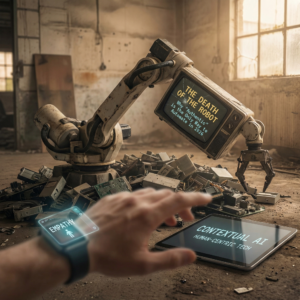
For years, the word “automation” conjured images of cold assembly lines or frustratingly circular chatbots that couldn’t understand a simple request. However, the narrative is shifting. We are entering the era of Authentic Automation—a paradigm where technology doesn’t just replace human effort, but mirrors human intent, empathy, and nuance.
In this post, we’ll explore what this concept actually means, where it’s currently making waves, and why the future of work looks more “human” than ever before.
What Exactly is Authentic Automation?
At its core, authentic automation is the use of AI and robotics to handle tasks in a way that feels seamless and personal rather than mechanical. To put it simply, it is automation that passes the “vibe check.”
Furthermore, it is defined by three specific pillars:
- Contextual Awareness: The system understands why a task is being done, not just how.
- Human-Centric Design: It prioritizes the user experience, ensuring that the technology adapts to the person, rather than forcing the person to learn “machine-speak.”
- Transparency: It doesn’t pretend to be human, but it operates with a level of sophistication that makes the interaction feel natural.
Consequently, the goal isn’t to trick people into thinking they are talking to a human; it’s to provide a service so efficient and thoughtful that the “bot” element becomes secondary to the value provided.
Where is it Happening Now?
You might be surprised to realize that authentic automation is already woven into your daily life. For instance, consider the evolution of customer service. We have moved past the “Press 1 for Sales” era. Instead, modern AI agents can now detect frustration in a customer’s voice and automatically escalate the call to a human manager with a full summary of the issue already prepared.
In addition to customer service, we see this in:
- Creative Industries: Tools that suggest color palettes or musical chords based on the “mood” an artist describes.
- Healthcare: Systems that automate patient data entry but flag specific emotional triggers or recurring symptoms that a busy doctor might miss.
- Personal Productivity: Smart calendars that don’t just book meetings, but “know” you need a 15-minute buffer for coffee after a long presentation.
Why “Authentic” Matters
One might wonder: if it’s automated, why does authenticity matter? The answer lies in trust. As a result of the digital explosion, consumers have become wary of “uncanny valley” experiences—those moments where technology feels slightly “off” or manipulative. By contrast, authentic automation builds brand loyalty. When a system remembers your preferences accurately and anticipates your needs without being intrusive, it creates a sense of being “seen.”
Moreover, from a workforce perspective, authentic automation reduces “burnout tasks.” By handling the repetitive, soul-crushing data entry, it frees humans to do what they do best: strategize, empathize, and innovate.
Where is it Going? (The Road Ahead)
Looking toward the future, the trajectory of authentic automation is aimed squarely at Hyper-Personalization.
Soon, we will likely see “Digital Twins” or AI assistants that are trained specifically on your unique communication style. Imagine an email assistant that doesn’t just draft a reply, but drafts it exactly how you would say it—complete with your specific brand of humor or professional brevity.
Nevertheless, this growth comes with responsibilities. Specifically, as automation becomes more authentic, the ethical guardrails must become more robust. We must ensure that “authentic” doesn’t slide into “deceptive.”
In the long run, the most successful companies won’t be the ones with the most automation, but those with the most thoughtful automation.
The Bottom Line
In conclusion, authentic automation is not an oxymoron; it is the natural evolution of our relationship with technology. Ultimately, it represents a shift from machines as mere tools to machines as intuitive collaborators.
So, as we move forward, the focus should remain on the “human” at the other end of the code. After all, technology is at its best when it makes us feel more capable, more connected, and—ironically—more human.

You might also like: Is AI taking your job